
If you are a man on a journey—whether in search of yourself or of an answer to the question of what it means to be a man—there are various ways you can help yourself along the way.
Men’s Circles (self-help groups)
The above list of workshops is for informational purposes only and is not exhaustive. It is not my intention to recommend specific commercial offerings. These workshops are conducted using various methods (therapeutic, as well as drawing on spirituality such as shamanism or Zen Buddhism) and led by individuals with diverse backgrounds.
Not every form of personal development is suitable for everyone. It is best to carefully read the description of such a workshop, the facilitator’s background and qualifications, write down the questions most important to you, and ask them directly to the facilitator.
If you are seeking support on your journey, I invite you to talk so that we can determine together how I can best accompany you.
LITERATURE

Kwaśniewski, T. i Masłowski, J. (2016). Czasem czuły, czasem barbarzyńca. Warszawa: Agora S.A.
Who is the modern man, and who would he like to be? How do they perceive themselves, and how do women see them? What influence do fathers have on what it means to be a man, and what influence do mothers have? What does it mean to be a distinct man? What is the long, dark night of the penis? What lies behind escaping into work, and what lies behind raising a hand against a partner?

Bly, R. (2017). Żelazny Jan. Poznań: Zysk i S-ka.
A fascinating story about the essence of masculinity and male initiation, but also about the problems and challenges in the life of a modern man. It is a modern, yet at the same time very ancient, vision of what we call masculinity. It confirms the power of myths and traditions in recalling and perpetuating timeless truths.

Biddulph, S. (2017). Męskość - nowe spojrzenie. Poznań: Do Wydawniczy REBIS.
The author writes, among other things, about building fulfilling romantic relationships and leading a successful sex life, about raising children, male friendships, developing spirituality, and meaningful, valuable work. He also does not shy away from difficult topics and offers advice on how to cope with feelings of unfulfillment and frustration, as well as the dark side of masculinity — violence, a tendency toward aggression, and self-destruction.

Corneau, G. (2016). Nieobecny ojciec, zagubiony syn. Od zranienia do rozmowy. Warszawa: Wydawnictwo Zwierciadło.
This bestselling guide, with over 300,000 copies sold, is an extremely important book on masculinity in modern times. By analyzing various types of paternal absence, the author explains, from this perspective, homosexuality, men’s disconnection from their sensitivity, difficulties controlling aggression, fear of intimacy, and depressive tendencies.

Zimbardo, Ph. i Coulombe, N. (2015). Gdzie ci mężczyźni? Warszawa: Wydawnictwo Naukowe PWN.
Should we really still refer to women as the “weaker sex” today? The education system favors female students, while the family crisis and the psychological absence of fathers deprive boys of an important role model. Virtual reality serves as a substitute for relationships for young men, while pornography clumsily replaces sex education. Do women, who are increasingly bold in pursuing their goals and achieving success in many areas of life, find worthy partners in today’s men?

Eichelberger, W. (2015). Zdradzony przez ojca. Warszawa: Wydawnictwo Drzewo Babel.
This book was not written against anyone. Its purpose is to warn against the negative psychological and social consequences of a father’s absence from the family. I hope it will prove helpful both to men who want to better understand themselves, their mothers, and women — as well as to women who want to better understand their sons and men, and themselves in the role of mothers to their sons.

Eichelberger, W. i Dziurdzikowska, R. (2015). Mężczyzna też człowiek. Warszawa: Wydawnictwo Drzewo Babel.
How can one defend devalued masculinity in a fluid reality? How can one protect one’s gender identity? What kind of self-transformation must one undergo to cope with cultural and social changes? I have been asking myself these questions for many years — and I have not yet found a fully satisfactory answer. Perhaps because the process of change is constantly accelerating? Perhaps because there is no such answer? Perhaps the answer is the absence of an answer, the lack of a recipe for masculinity, and that masculinity is eternal mindfulness and being in harmony with changing circumstances? One thing is certain — we must not stop searching.
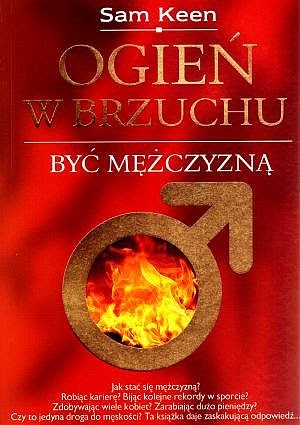
Keen, S. (2008). Ogień w brzuchu. Być mężczyzną. Warszawa: Wydawnictwo Czarna Owca.
This groundbreaking book by Sam Keen serves as an inspiring guide for men seeking new personal ideals. What does it really mean to be a man? “Fire in the Belly” tackles this question, boldly challenging outdated models of masculinity that impoverish, harm, and alienate men. It shows how to find your own path to understanding the mysteries of masculinity, allowing you to discover new vitality and power within yourself.

Johnson, R. (1996). ON. Być mężczyzną we współczesnym świecie. Warszawa: Jacek Santorski & CO Wydawnictwo.
Robert Johnson’s second book (following “She: The Essence of Womanhood”) — this time for men. The author offers an innovative interpretation of the legends of the Holy Grail and King Arthur, explaining the nature of men.

Selby, J. (1999). Ojcowie. Warszawa: Wydawnictwo Czarna Owca.
"...During meetings with readers of my book *Betrayed by My Father*, I have repeatedly heard the question: What next? What should we do about this alarming diagnosis of fatherhood in our times? Where to begin? John Selby offers a difficult but honest answer to these questions: start with yourself. Moreover, he shows how to do it. The author wisely supports and guides us on this journey..." Wojciech Eichelberger

Schon, L. (2002). Synowie i ojcowie. Tęsknota za nieobecnym ojcem. Gdańsk: GWP.
What happens when a father is absent from the life of a young child, an adolescent boy, and eventually an adult man? The author, who has devoted many years of research to the issue of fatherhood, attempts to answer this question. He considers the exploration of longing for a father — a longing that has left a deep mark on his own life — to be particularly important for those who grew up largely or entirely without a father. Drawing on his psychoanalytic practice, he also offers guidance to mothers on how to compensate for this acute absence in their child’s life and ensure the child’s happiness.

Pilarski, P. i Gryżewski, A. (2018). Sztuka obsługi penisa. Warszawa: Agora S.A.
“The Art of Handling the Penis” is a book that tackles topics men avoid like the plague—their sexuality and related issues, such as erectile dysfunction, low libido, pornography addiction, or simply a lack of sex in a relationship. In his practice, Andrzej Gryżewski deals with such issues every day — he combats stereotypes created by the media and culture, false notions drawn from porn movies or bragging in the men’s locker room, fills gaps in sex education, and addresses fears and emotional issues that men are often unaware of.